
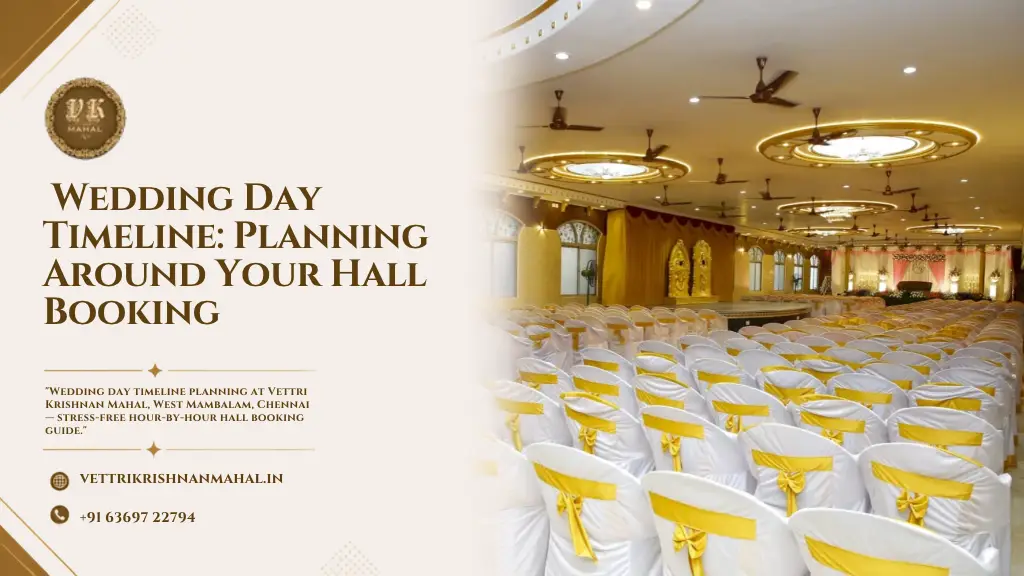
A wedding day timeline can look perfect on paper and still run late if the banquet hall doors open later than expected. Your booking window affects more than the reception: it can shape setup, vendor arrivals, guest transitions, and cleanup.
Start with the hall’s access times, then work backward from its firm deadlines. With realistic travel and transition buffers, you can plan a day that feels full without packing every minute.
Each venue has different rules, and your event format and contract matter too. Confirm times and policies with your banquet hall and vendors before you set the schedule in stone.
Start Your Wedding Day Timeline With the Banquet Hall Booking Window
Your banquet hall booking sets the limits for when people can enter, when guests can celebrate, and when the space must be clear. Confirm the details in writing before choosing ceremony and reception times. A quick review now can prevent a rushed setup or an unexpected late-night fee.
Confirm when venue access begins and ends
Ask for the exact access start and end times, and confirm who can enter during each part of the booking. The couple, wedding party, planner, caterer, florist, and other vendors may not all have the same access. Check whether early entry or a late departure is possible, and get any extra charges in writing.
Separate guest hours from setup and breakdown time
Find out whether the booking includes setup, sound checks, décor installation, and cleanup. Some halls require all work to fit within the same window guests use, while others offer separate setup time or paid extensions. Ask for vendor load-in and load-out slots, too, so deliveries don’t collide at the entrance.
Check the rules that can change the timeline
Read the contract for details on catering access, music cut-off, room changes, storage, candles, confetti, alcohol service, and cleanup. A rule about open flames or confetti can change décor plans; a strict music deadline affects the last dance. Ask the venue coordinator to explain any clause that could alter the schedule.
Build a Wedding Day Timeline Backward From Hall Deadlines
Once you know the hall’s firm deadlines, work backward to place the ceremony, travel, photos, and reception events. Keep the schedule realistic: a plan with no transition time can fall behind after one late shuttle or a long dinner service. Use clear start and finish windows rather than expecting each moment to happen on cue.
Anchor the schedule to the hall’s end time
Work backward from the required guest departure, music stop, vendor strike, and final exit. Those times may differ: guests could need to leave before vendors can pack equipment, and the band may have to stop before the booking ends. Build the schedule around the earliest deadline that affects each group.
Add ceremony, travel, and arrival buffers
Include the trip between ceremony and reception sites, plus time for parking and walking into the hall. Check the route at the time of day you’ll travel, and allow extra time for traffic, loading, or guests who need help finding the entrance. A 15-minute cushion can give a late shuttle room to catch up.
Leave breathing room between major moments
Entrances, dinner service, toasts, cake cutting, and dancing each need a transition. Guests may take time to find seats, servers may need space to clear plates, and a photographer may need a few minutes to gather family members. Add a short buffer between key events instead of scheduling them back to back.
Fit Setup, Vendor Arrivals, and Guest Experience Into the Booking
The room needs to be ready before the first guest arrives, and every vendor has a part in getting it there. Plan access and setup in an order that leaves time to check the finished space. The guest experience starts at the parking lot, not at the first toast.
Schedule vendor load-in and room setup
Set arrival windows for rentals, flowers, décor, catering, entertainment, and photography. Confirm the loading entrance, setup order, available tables or carts, and who will approve the room before doors open. If a florist needs clear tables before setting centerpieces, build that order into the plan.
Coordinate a room layout that supports the event flow
Map the path guests will take from arrival to cocktail hour, dinner, and dancing. Ask whether the hall requires a room flip, such as moving dining tables to make space for dancing, and confirm how much time the staff has. If a flip is needed, schedule it while guests have a planned place to go.
Make guest arrival and accessibility part of the plan
Share clear directions, parking details, and entry instructions with guests before the wedding. Confirm step-free access and the route between event spaces for guests with mobility needs. Bad weather or a busy entrance can slow arrivals, so leave enough time before the ceremony or reception begins.
Shape the Reception Schedule Around the Hall’s Service and Sound Rules
The best reception order depends on how the hall serves dinner, runs its bar, and handles sound. Share your draft schedule with the venue coordinator, caterer, and DJ or band before you finalize it. Their input can help you avoid a speech during meal service or a final dance that runs past the music cut-off.
Match dinner timing to catering service
Ask the caterer or venue about the meal style, kitchen access, dietary requests, and expected serving pace. A plated meal needs a different rhythm from a buffet, where guests may leave their seats in waves. Place speeches between courses or after dinner, based on the service plan.
Plan speeches, traditions, and dancing with transitions in mind
Set the order for entrances, toasts, special dances, cake cutting, and open dancing, then allow time for guests to move between them. Choose the moments that matter most to you before the reception begins. If dinner runs late, you can shorten a flexible segment instead of cutting a moment you care about.
Protect the Timeline With Clear Roles and Backup Plans
Even a thoughtful schedule may need small changes on the day. Someone besides the couple should track time, contact vendors, and decide what can move. Agree on that person’s role before the wedding so you aren’t answering timing questions during your own celebration.
Assign one person to manage timing
Choose a planner, coordinator, or trusted point person to keep the day on schedule. Make clear who can approve a change and who should contact each vendor. The couple should know where to go next, not spend the reception relaying updates.
Prepare for delays without sacrificing the essentials
Think through likely slow spots, such as late arrivals, traffic, long portraits, or setup running over. Decide in advance which optional moments can be shortened, moved, or dropped if time gets tight. Keep the ceremony, meal, and any traditions you value most at the center of the plan.
Share one final timeline with everyone involved
Make one current schedule with contact details, locations, access times, vendor arrival windows, and key deadlines. Send it to the venue coordinator, vendors, wedding party, and anyone handling transport or setup. If a change comes up, update the shared version so no one works from old times.
final thoughts
Your banquet hall booking is the frame for the whole wedding day timeline, not only the reception. Confirm contract details, plan backward from firm deadlines, and leave room for travel, setup, and transitions. Give one person the job of tracking time and sharing changes.
Before the wedding, review the final schedule with your venue coordinator and vendors. Then put it in the hands of everyone who needs it, and enjoy the moments you’ve planned.
Planning your wedding? Contact Vettri Krishnan Mahal today to check availability and schedule a site visit.